Category Archives: Teachings

Illuminate, Shine Light On

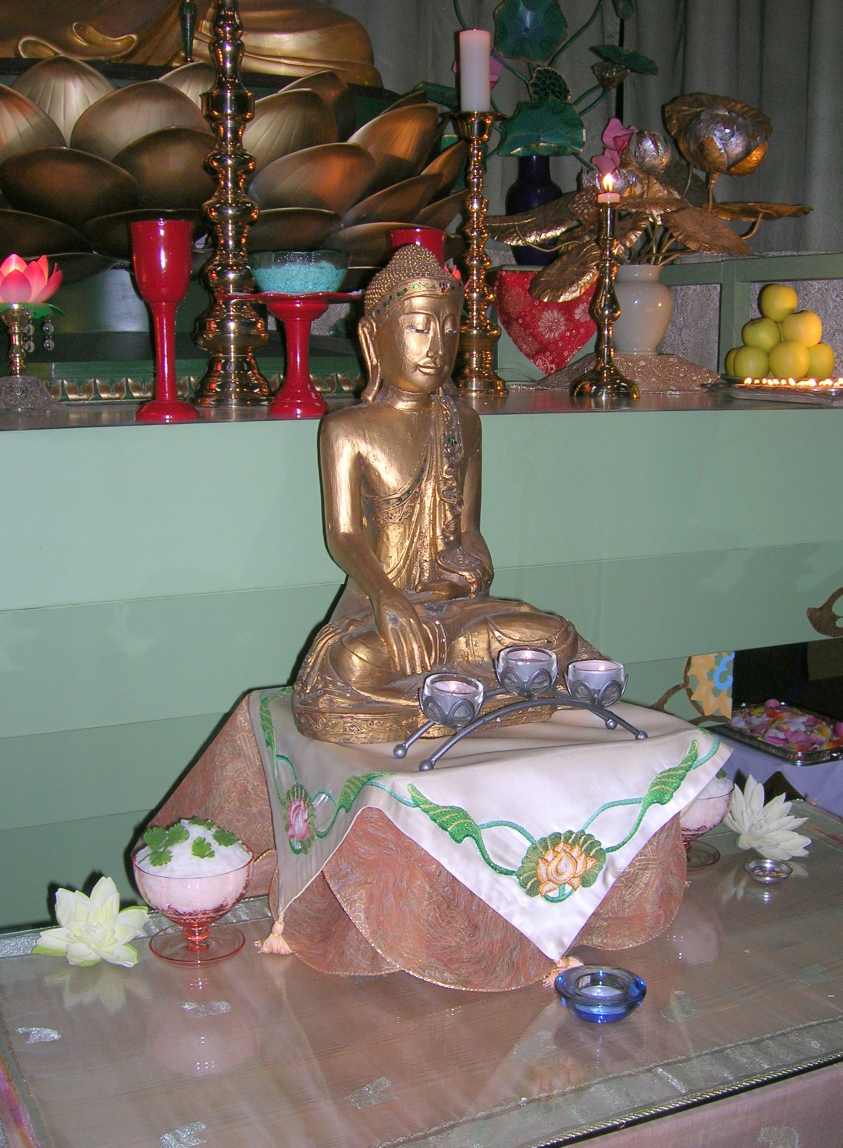
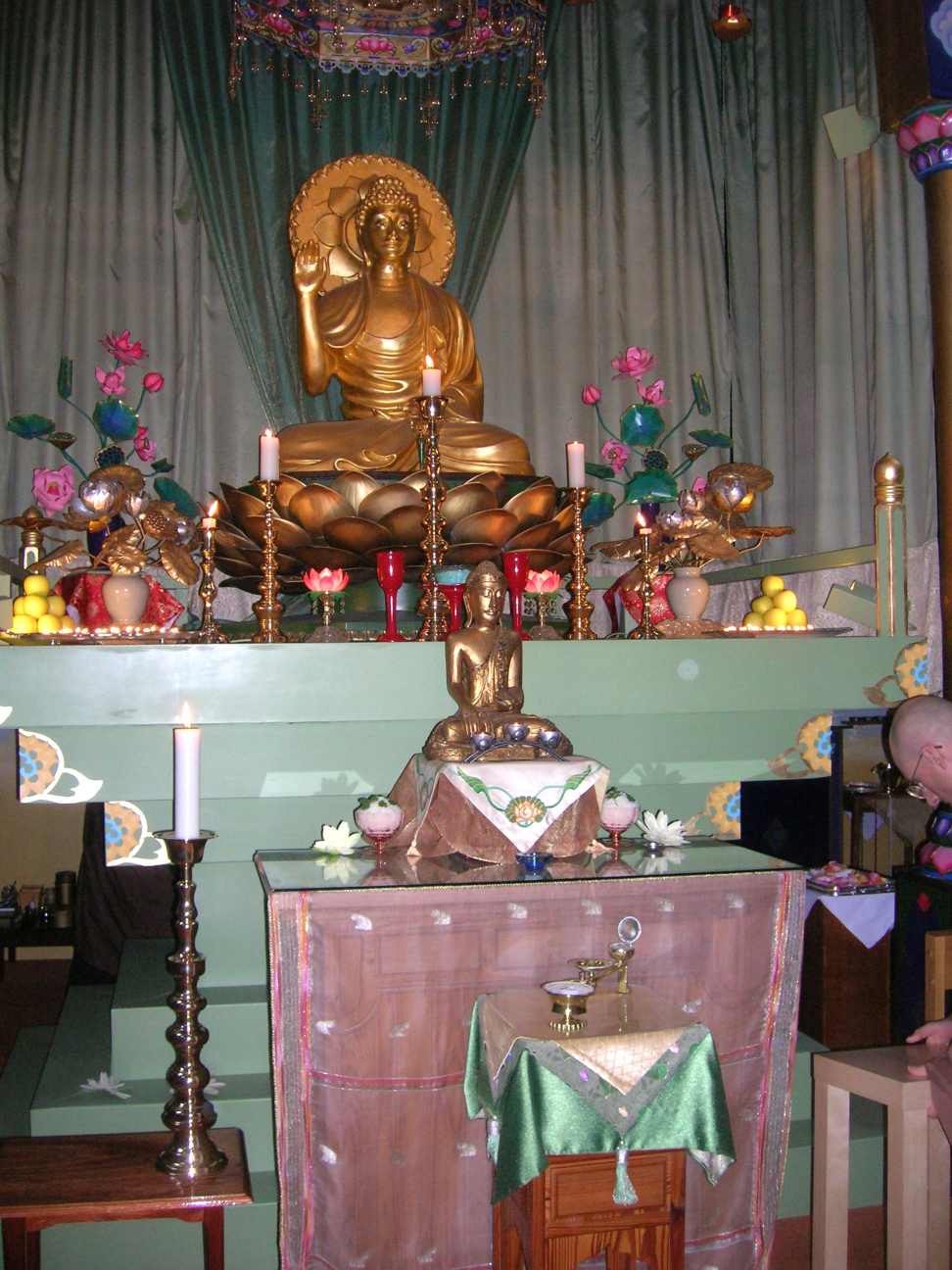
The main altar this morning.

Shakyamuni Buddha in earth witness mudra.

When Shakyamuni was enlightened, He said, “I was, am and will be enlightened instantaneously with the universe” and now, as we hear these words, we are assured anew of our own Buddha Nature and our ability to enter the path of Truth. When Shakyamuni died, He told His followers to make His teaching the light of their lives and to make their own lives shine as brilliantly as the sun; the light of Shakyamuni and His followers has shone through many centuries and has been Transmitted to countless people. We must follow in the footsteps of those who have gone before us so that our own light shall shine in the same way, and we must Transmit it, even as they did, so that it may shine brightly in countless worlds and for thousands of lives to come.
This text from the offertory sung at the very end of the Festival of the Buddha’s Enlightenment at Throssel.

Apparently last evening, as a parting comment at the end of a conversation about training, I encouraged somebody to write down some of the insights which had come during the week-end retreat. It was clear that the light of insight had illuminated segments of her life and others would benefit from what she had come to understand. We’ll see what she produces.

Appreciative Joy

Two women. One in America the other in England. Both have recently received acknowledgment of the contribution they have made in their professional work. They have been promoted. One made President of the company she started out with by doing their accounts from her home. The other potentially being made Head Teacher of the school where she teaches, and as I understand it, in extremely challenging circumstances too.

Such recognition of ones professional ability is no small thing. Yes, there is likely to be all those things that spell ‘success’ in the world of work: all that comes with greater status, more money as well as extra privileges and ‘perks’. Who knows what promotion brings but one thing which is likely is for a rash of jealousy and envy to rise up amongst the ranks. Who has not been disappointed when others receive the public recognition you privately longed for.

I learned about mudita, or more correctly the teaching was pointed out to me, when I was suffering from the private hell of envy. I can’t even remember what that was all about now. Mudita is the possibility, the human potential, to have arise naturally a sense of sympathetic or appreciative joy. It’s chief characteristic is a happy acquiescence in others’ prosperity and success. Knowing that this is possible and can arise out of ones depths naturally, even in the face of crushing disappointment, is one of the great blessings.

One might imagine that Buddhist, religious practitioners, would be ‘above’ such matters as recognition of ones contribution to society. That it might not have any meaning. Water of a ducks back in fact. Or could it be that there is a natural pride that grows in doing ones best and that we humans wish to join our hands, and applaud such efforts. Effort’s which all benefit from, ultimately.

Well done my dear good friends. It really doesn’t matter if you accept the accolade or not, the important thing is it was proffered.

Palpable Disquiet

Nearly all the retreat guests have gone. We had a good retreat together and I was glad and happy to be talking about Buddhism, practice and the Precepts. Somewhere in there during the week-end we talked about karmic consequence and how one can recognize negative consequences by a palpable disquiet experienced within ones body and mind. One blog reader who appreciates words and their use was taken with these two words so I thought I’d share them with you all.

There were a few Mountains readers here. It was a delight to meet those known to me already as well as those who mentioned being a regular here who I didn’t know about. I’m generally amazed that real live people read this and even get something out of it that’s useful too. There may well be a few more checking in following the retreat. Welcome if you are one of them.

Iain over in Japan, who set up this blog for me initially, writes about the third anniversary of his fathers death, which is today.

Intention is All

It’s The Life of the Precepts retreat this week-end.

The dharma talks (during the retreat) will address in practical terms how we can apply the Precepts in daily life and how the practice of the Precepts is inextricably interconnected with mediation and true wisdom. Taken from the 2007 Retreat Programme flyer.

Many people are here who will be attending Jukai next spring. Jukai is a week-long retreat with a number of ceremonies including The Receiving of the Precepts, which in so doing people formally become a Buddhist. People who do not, or are not able to, attend Jukai are no less Buddhist if the Sixteen Precepts are practiced whole heartedly.

The journey to the monastery, priory, meditation group or temple to receive basic instruction about the practice is perhaps the most important ‘ceremony’ of all. In fact we say the first ceremony of Jukai IS the journey to the monastery.

Trog waiting at Dinas station on the Welsh Highland line with one of his human family.

I think this little dog is exhibiting bright attention, which is important in terms of following the Precepts and practice in general. My thought for the week-end is ‘intention’, the Precepts are all about intention: to follow, to refrain, to relinquish, to open to Compassion. And the intention to do the very best one can. It is enough.

That’s the last Trog picture for now.

Robes Are For Life

There is quite a lot of wear and a huge tear in the robe I’m mending for one of the monks at the moment. I really enjoy the challenge. The cuffs, hem, collar and under arms are the most vulnerable areas for fraying and ripping. Sometimes material from a hem can be cut out and used to make a new collar thus giving the robe literally years more usable life. But one can only go so far. A hem can only be mended so many times before the whole thing is too short, cuffs likewise. Then there are stains to deal with. Oil, grease of any kind and paint are the worst although bleach stains, in the wrong place, can spell the end without any question.

When one wears the same thing day in and day out it’s hard to retire it. My late Master would say with a kindly chuckle, You can take loyalty too far you know, when she’d see a monk walking about in robes well past retirement age. As a young monk I’d mend and patch for the senior monks who were too busy to do it themselves. I knew they would wear what they had into threads and when caught early enough I could extend its life considerably. However those older monks would take a lot of convincing when the moment really had come to hang up that robe for the last time. The one I’m dealing with at the moment will be good for a few more years when I’ve finished with it. Hurrah!

I’m thinking of robes because they are so closely associated with their inhabitants. After my Master died, eleven years ago to the day, I inherited one of hers. Having remade it to fit me, I wear it. Sometimes I think I wear it for her. When it’s time has come though I’ll be washing windows with it. You can take loyalty too far!