Category Archives: Overcome Difficulties

Counting The Cost – Giving Again

I received the following thoughts the other day in response to my post about giving. It struck me as being so much how we are. Just a few days previously I’d sent a birthday card to a fellow monastic. Days later I asked, Err, did you get the card I sent you? It was a funny card and I wanted to share the laugh, live. But I think I was the only one who saw the fun it it! Ah well. So read on here and see your own humanity in the way we give tokens like cards and presents. They forge human links and indeed we are looking for some form of feedback. Is it wrong to expect or want something back? Acknowledgment? Personally I don’t think there is a wrong or right. We all know when we are clinging and then clinging to the clinging etc. Painful, human and forgivable. Forgive and forget – eventually.

Your post on giving and generosity has had me thinking a lot about this. I guess it’s one of the themes of my life at present and I wonder how it all really works. We are told to give without any expectation of anything back. We are told to let go. To give what we give freely. Which all sounds very convincing. And yet I seem to find it almost impossible to do, it seems.

I buy a birthday card for a friend. I take a long, long time looking for something that seems appropriate and that I think will give her pleasure. I wince a little at the cost. The card I have chosen is, to me, a thing of great beauty and I would like to have it myself, so I think that she too will appreciate it. In giving it, I am expecting the gift to be acknowledged. To get a thank you, at least. I’m hoping for something more. A shared appreciation of the beauty of the card, a moment of communication, a recognition of relationship perhaps, a glow of affection. However it’s not that way.

What I get is nothing. The giving of the card goes unremarked. I see it on display with the few others she has received. It is not mentioned. I am sad for the card because it is so lovely. Because I now have no idea whether or not it was liked, I have no idea either what would be appropriate next year. I have no evidence on which to base any future decisions about cards. Maybe next year I don’t send one. Maybe I take less time to choose. Maybe I try a different style of card.

I look at my disappointment and try to see all my complicated motivations in this, and to let go, let go, let go. I know it’s not supposed to be good to label feelings as negative, or bad, so I try to let go of simply feelings without categorising. If she’d thanked me, seemed pleased or touched, I suppose it would have been good to let go of any more pleasant feelings I may have too. Give without expectation. I wonder if this is really possible.

I look at other aspects of my life. Care work. I’ve recently had some tough cases – my two worst case scenarios I suppose: patients covered in faeces, and someone whom I found in trouble when I arrived in the morning, who had had a mild heart attack, collapsed and unable to move. Ambulances, the works. High adrenalin. I think in these cases it is easier to give without expectation. And perhaps it is actually because I am not asking anything from the relationship, have no needs or expectations of the people. But the fact is of course that they are generally extremely grateful and appreciative of my care. I know I do it well and I love the feeling that in this context I seem able to offer the best of myself. (Probably need to let that go too.)

Perhaps, in giving, what we generally need and like is simply some sort of response. Maybe this is feedback. If you don’t tell me you like this or that, how do I know whether to keep on doing it? I have been in situations, like the author in the article but on a smaller scale, where somehow my generosity has turned sour and become a burden to the receiver. I struggled too as the receiver of my sister’s generosity, which always seemed to come with such strings attached that I would almost rather not have had it. And yet how to turn it down? That relationship went badly wrong too in the giving, the receiving, the inequalities.

How hard it is to be genuinely generous and open-handed, and not somehow keep some tally in one’s head as to how generous one has been and how much one is owed in kind, whatever that kind may be.

And how true is it that we rise to the occasion, jump in and do what we can. The other day I came across two young lambs in the road and stopped to catch them and return them over the hedge to their mother. I was proud of myself. Glad that I stopped and didn’t just skirt around them leaving them to run about distressed. And I’ve mentioned the incident to several others. It feels good to do good things and others share that when they hear about animal rescue incidents. We are moved for example to see the abused bears from the circus being released into better circumstances. Something visceral going on in us when we witness generosity.

We all know when we are clinging. And then clinging to the clinging! Painful, human and forgivable. We can forgive and forget. Our human feelings, pleasant and laudable or shameful and embarrassing are passing – always passing.

Let things pass, and they will.

Thank you to my correspondent for writing.

Grief

top_of_the_hill1.jpg
Gone to the top of the hill

Warm sunny days
a sliver moon.

Stars bright
in inky black.

Lost now –
remembered.

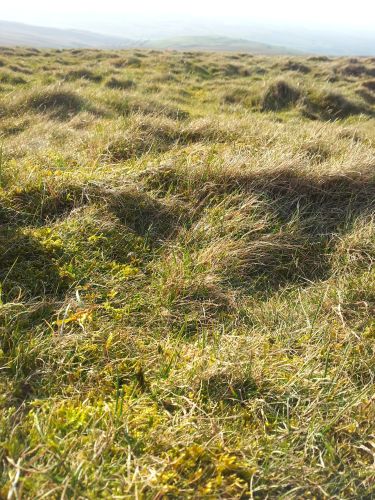
I went to the top of the hill where the late Iain Robinsons cremated remains were scattered last August. Thought I’d gone for the view but as it turned out it was to let a trail of grief into the breeze.

Quick Acting

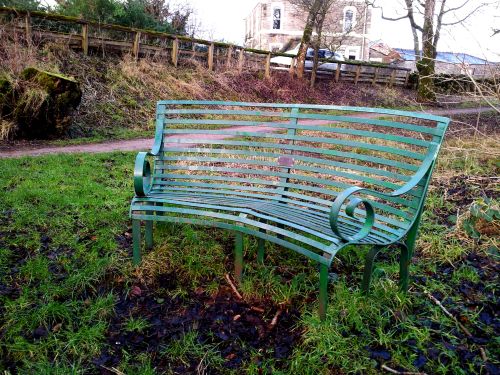
Bench_in_the_park1.jpg
Do they get used? Enough.

There have been a couple of occasions in the past few days when I was very much driven to act, but I didn’t. I restrained myself. And in both cases that was GOOD! It is indeed good to refrain when our quick acting, quick fire selves would have us do otherwise. Refraining is what we DO when there is something we are driven to do and yet at the same time know it’s not a good plan.

What makes the difference with regards firing off, or not, is the space between stimulus and response. Somebody conveyed in casual conversation a piece of information about a course of action and I instinctively knew it was not a good course. That’s a stimulus. However, I had extra information that backed up my knowing it wouldn’t be a good course of action. So, the obvious course of action on my part was to intervene. To influence the course of action and STOP it! Ah yes, I’ll write an email!

Thankfully I didn’t write that email. Even if I had there would not have been a problem. Probably. It would have depended on the tone of voice I’d have adopted, the words used and the information conveyed. I want you to know that the gap between stimulus and my (non) response looked nothing like that idealise mellow, Now I am going to sit still with this. Oh no!

I ranted! Thankfully into the ears of a sympathetic and sane friend. (This is an aspect of taking Refuge in the Sangha but you have to be sure it’s with somebody who sees things differently to you, obviously.) She talked me down by appealing to reason and in the process, unintentionally I believe, called into question a basic operating premise which I habitually act from. The above is an example of the koan arriving naturally, being seen (with a little help from a friend), being acknowledged and not acted upon. That not acting, refraining and restraining oneself, can be excruciating. My legs took me to my computer. My hands and mind WANTED to write an email. Holding oneself back is so uncomfortable and often feels wrong. This restraining/refraining, repeated many times, lessens the energy driving the koan. And with the diminishing of energy there can follow real change in ones behaviour.

The next day I heard the course of action was not taken. By that time I’d forgotten all about the matter. Just one day later and it wasn’t an issue any longer. The fizz and pop had gone out of it all. Oh right, that’s good. Was my response to the news. How quickly ones nervous system can go from high alert to what’s called in certain circles, rest and digest mode.

So IS there a space between stimulus and response? Are we able to catch ourselves and refrain when that’s the Preceptual way? I’d say yes, perhaps not 100% of the time. Ones background intention to act Preceptually is paramount though. Regular formal meditation has profound influences on us and how we function. So that’s a GOOD to practice.

Look eee here! Meditation is being regarded as medicine. This is not news I’m sure.

Time for Your Meditation, The Independent

It has also been suggested that meditation might work by affecting the autonomic or involuntary nervous system, which regulates many organs and muscles, controlling functions such as heartbeat, sweating, breathing and digestion. It consists of the sympathetic nervous system, which prepares the body for action and the “fight-or-flight response”, where heart and breathing rates increase and blood vessels narrow, restricting the flow; and the parasympathetic nervous system, which causes the heart and breathing rates to slow, and blood vessels to widen, improving, blood flow (“rest and digest” response). It is thought that meditation may reduce activity in the sympathetic nervous system and increase activity in the para-sympathetic system. More than 50 clinical trials are under way looking at the effects of meditation in various conditions, or at how it may work.

Religion, as I understand what I am committed to, takes meditation beyond the therapeutic, puts us in touch with universal truths, spiritual truths. This does not, in my thinking, negate or diminish the therapeutic value. Quite honestly I’m glad of the therapeutic impact mediation has on the nervous system. The danger however for those following a spiritual course is to leave out or diminish the Preceptual/spiritual level.

Now, reflecting some more on the above scenario I see that it was predominately my body I was restraining. Stopping my limbs doing what my mind wanted to do. Interesting?

This is for the very many people, monastic and in the lay community, who are my guides and my refuge. Thank you.

Fallen Into A Hole

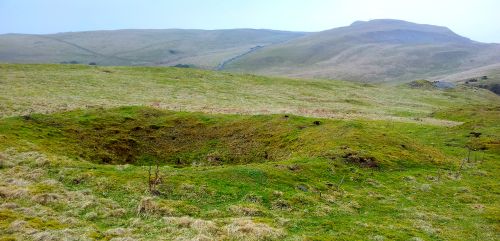
sink_hole_mineshaft1.jpg
On the moors are to be found Shake Holes, also called Swallow Holes. This might however be a disused mine shaft and not one of these holes.

I was once told by a professional psychologist, and monk of our order, that most adults have some degree of depression. Thankfully, for the most part, I manage to keep myself out of trouble in this regard. Although I do have my moments. There are very many reasons to pass through depressed times including finding that ones way forward is being suppressed – either by oneself or by ones circumstances (ususally a combination of the two). For some people depression is life limiting in the extreme and my heart goes out to those in such circumstances.

There was a retreat recently where a bunch of people gathered to examine the subject of depression. Most had a very personal interest in the subject. One of the monks from Throssel Hole Buddhist Abbey gave a talk Training With Depression (it’s in two parts.) You will need to scroll down the page to reach (talks) By other monks and our lay sangha.

My Internet connection is still playing up unfortunately….

The Warp And Woof Of Communication

I thought this would be about knitting. But it isn’t. I thought it would be about potential. Realizing potential both individually and collectively. But it isn’t. Thus have I struggled these past days to talk about the warp and woof of communication. As we know Warp and Woof is used as a metaphor for the underlying structure on which something is built. A relationship. A family. Society. A monastery. An interest group. An individuals life. Warp and weft are the vertical and horizontal threads woven together to make fabric. Cloth or fabric, used metaphorically, have a similar meaning to warp and woof. The fabric of her life as a working mother, for example. The weaving together, the warp and woof of her life. I love the image invoked here. A drawing together in a dynamic way. These metaphors are used to indicate something whole and positive. Knitted together, not tied down! Perhaps this post is about knitting after all!

Here below is a quote from a blog post titled Potential on Warpandwoofknitting. At first one might think this is a knitting blog and indeed knitting features in many posts. However the warp and woof, the underlying fabric of the blog is something much bigger, broader and foundational. If I were to name the cloth it would be Love, Compassion, Humour and Humility.

The yarn pictured below (in this blog post) is a wool/silk blend I spun up. It has lots of shine and beauty on it’s own, and took up space on my coffee table for quite a while just because I loved to look at it. Eventually though, it needed to be worked up into something useful and became this hat, and another with some little gloves for Mom. So pretty! It is kind of stretching the metaphor to go too far with this, but midlife is kind of feeling this way lately. Full of potential.

Warp And Woof Knitting

Anybody who knits knows it isn’t only about making a piece of cloth which can be worn, draped and otherwise enjoyed by oneself or by others. The knitting itself brings about something foundational to ones being. Feeds the spirit somebody wrote me recently. A drawing together in a dynamic way. Positive. Nourishing.

Mention the warp and woof, or the foundational fabric, of our human interactions, communication, and the response would most likely be a grimace or a groan I suspect. Not always of course. Our common experience of human interactions, communication, more often than not doesn’t bring to mind nourishment, or nurturing the spirit, nor a drawing together in a dynamic way. And as I write that I’m reminded of how expression through the arts, both high and everything else do have the effect of nourishing and drawing together.

So perhaps I’m thinking of the utilitarian communications we use every day, getting business done. Getting ones point across. Expressing a view. Selling or buying – anything. Negotiating, persuading, manipulating. Verbal and written expression between us humans can be an emotional mine field can’t it! Wars are won or lost on words. Reputations ruined by words or more like the warp and woof behind them. What is the foundational fabric of our human interactions?

What is it that can transform a mine field into a beautiful garden? Is that even possible where competing needs and wants drive people into corners rather than weave together as a cloth? The best of gardens have an integrity, you enter into a garden. There is diversity of colour, texture, height. There are arresting features, a fountain, a statue. There is the compost area and the less than sightly behind-the-fence areas as well.

Leave a mine field not maimed for life, one is relieved to have left. To say the least. Leave a beautiful garden and some of it comes with you. As would a perfume.

In terms of human interactions keeping true to the Precepts, nurturing Love, Compassion, Wisdom and Humility goes a long way towards leaving ones room or computer or table – encouraged. As with midlife so too with human interactions, they hold great potential – for the good.

Happy knitting people! And if you have a sense of humour, knit and have hours and hours free, read Whodonnknit. Life will never be the same again!