Category Archives: photograph

Knowing without knowing

Yreka - from an art show.
Yreka – from an art show.

The other evening several of the monks and many lay members attended a small art show in Yreka titled Women Who Know Alaska. One of the women is a regular attendee here at Shasta Abbey. We went to support her and her artistic endeavours.

After a fairly brisk look at the art on the walls I chatted sociably and then sat with an elderly woman on a window seat, the town of Yreka behind us. After the preliminaries, What’s with the hair thing? and Brown and purple, nice colour combination! we settled to chat. Story or in this case autobiography tumbled from her lips. The abridged version. I was not a passive listener, Oh yes, and how did you learn to walk again after the accident? and having been invited to feel the metal in her reconstructed knee, Yes the metal is close to the surface! Her lived-in face and hands spoke volumes, as did she.

The whole room was redolent with memory, animated memories through the art works, the people and specifically the elderly woman. It was as though all was animated wallpaper; to appreciate, enjoy and wonder at. To engage with wholeheartedly and without reservation. And silently,  out of sight, is the knowing-without-knowing. Knowing the story, the multi-faceted, multi-coloured and textured surfaces in the room were fundamentally as passing smoke in blue sky or rocks and pebbles in clear running water. AND.  And this is the wonder of engaging anywhere at any time, that the knowing-without-knowing is known through the animated wallpaper of events and circumstances of living.

For anybody who might be wondering the above is simply a creative way of talking about meditation in daily living. And, in particular, affirming that daily life isn’t the poor relative of *formal meditation.

*The word formal was added into this post on 30th October for clarification.


Cloister Encounter

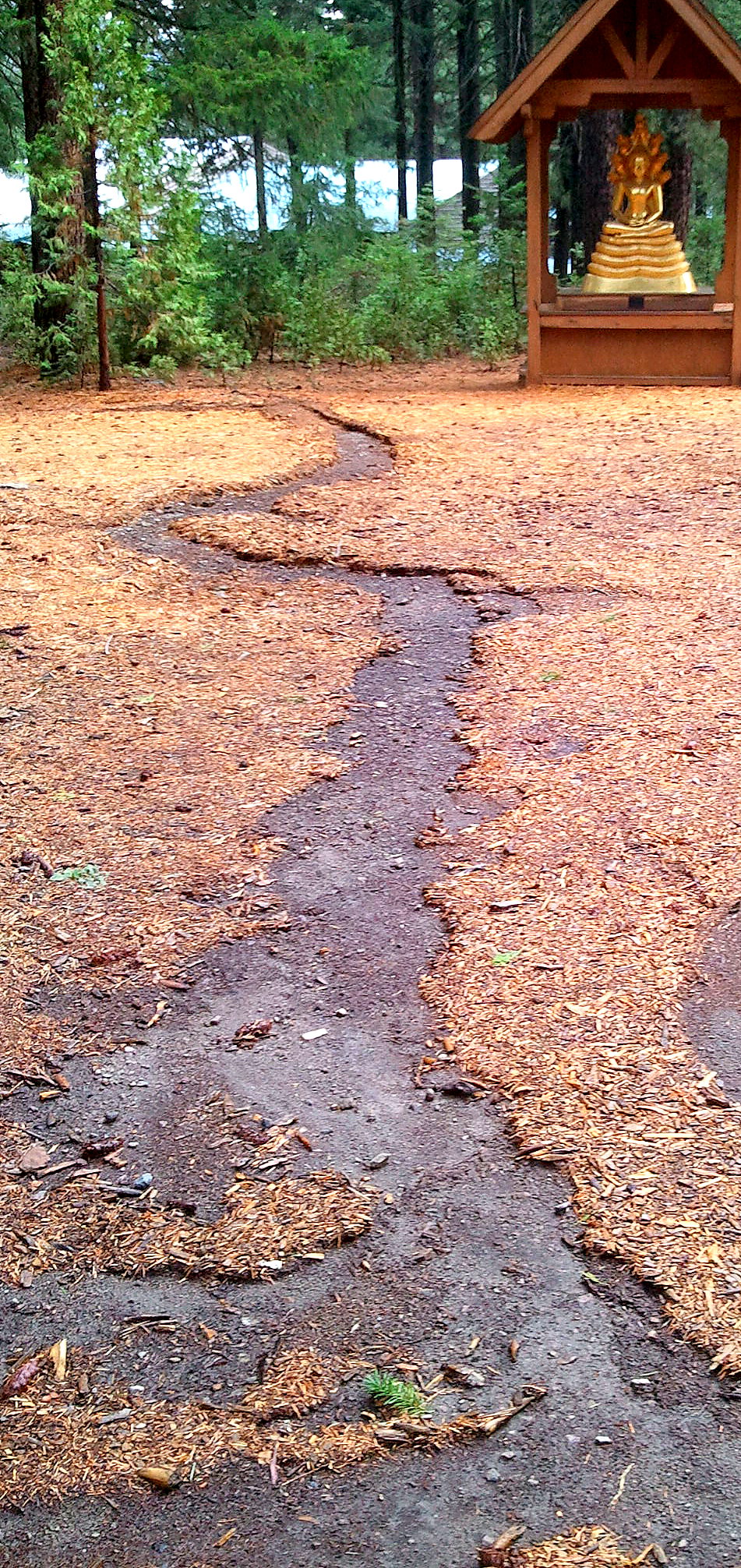
Rivulet by the cloister.

I met a lay guest on the cloister after lunch today.  I’d recently picked her up from the Greyhound bus stop. We know each other well of old. Ah, hello Rev. Helen she said brightly! The Reverend Helen and I are quite often mistaken for each other. No. It’s Mugo, I respond. With a bit of a laugh about mistaken identity we chatted on about this and that as she made her way (ever-so-slowly with the aid of a walking stick) up the cloister towards the Guesthouse. Eventually the conversation drifted to matters of Buddhist practice. I know Buddha is everywhere. So why do I have to keep on coming back here? she said. Such a soft kind 80 plus face with tears and a smile at the same time. Thinking on my feet I responded, Well, when you had a car you took it in to get the oil changed and the tires checked and have a general service. Right? Same for you coming here isn’t it? I didn’t need to say much more since she got the analogy. Smiling happily, assured her coming and staying at the monastery was not a sign of weakness or faulty faith she slipped into the building. Hopefully for a nap.

Living in Books – getting lost

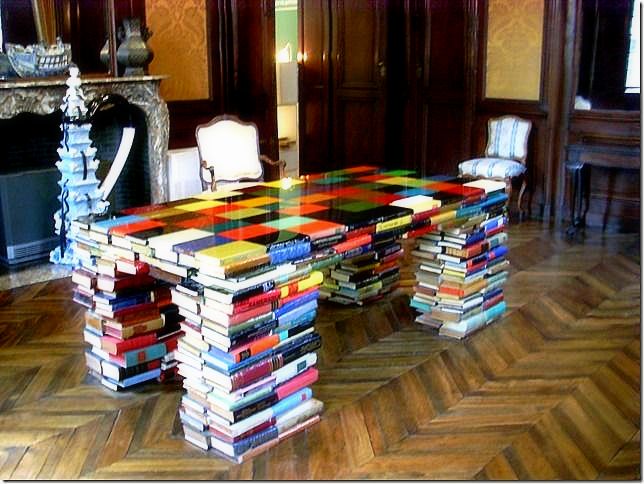
On display at the Museum of Fine Arts, Ghent Belgium. Functional books!

Here I am again quoting from a post in Brainpickings. Yet again. This quote comes from an essay called “Flight” by Rebecca Solnit, in her collection of essays “The Faraway Nearby”
The following is taken from A Book Is a Heart That Only Beats in the Chest of Another: Rebecca Solnit on the Solitary Intimacy of Reading and Writing

Like many others who turned into writers, I disappeared into books when I was very young, disappeared into them like someone running into the woods. What surprised and still surprises me is that there was another side to the forest of stories and the solitude, that I came out that other side and met people there. Writers are solitaries by vocation and necessity. I sometimes think the test is not so much talent, which is not as rare as people think, but purpose or vocation, which manifests in part as the ability to endure a lot of solitude and keep working. Before writers are writers they are readers, living in books, through books, in the lives of others that are also the heads of others, in that act that is so intimate and yet so alone.

Well, I have been thinking of my own reading habits as a girl and teenager. OF COURSE I read books, how could I have NOT done so. The thing is I got lost in them to such a great extent – I ran into the woods alone with them, so to speak – that I quite forgot I’d had them in my hands. Such was the level of my intense level of connection with story I lost contact with everything around me.

Malcolm Saville wrote children’s adventure stories set in the area of East Sussex where I lived. I read them all probably. There were many other authors I favoured too. However everything changed one day while in Spain in my early 20’s when re reading a Daphne du Maurier. I realized the English images from the story were layered on top of what was coming into my eyes! Worse, I was an actor from the book, in costume, walking along a harbour in Santa Cruz in the Canary Islands! Clearly things had gone too far. I cut back drastically on reading from then on mostly because I started to study for a degree.

One can get lost in stories, one can become lost anywhere with anything that takes a grip. Even good and helpful pursuits.

Thanks to Cliff for the photograph.

Thoughts Unspoken

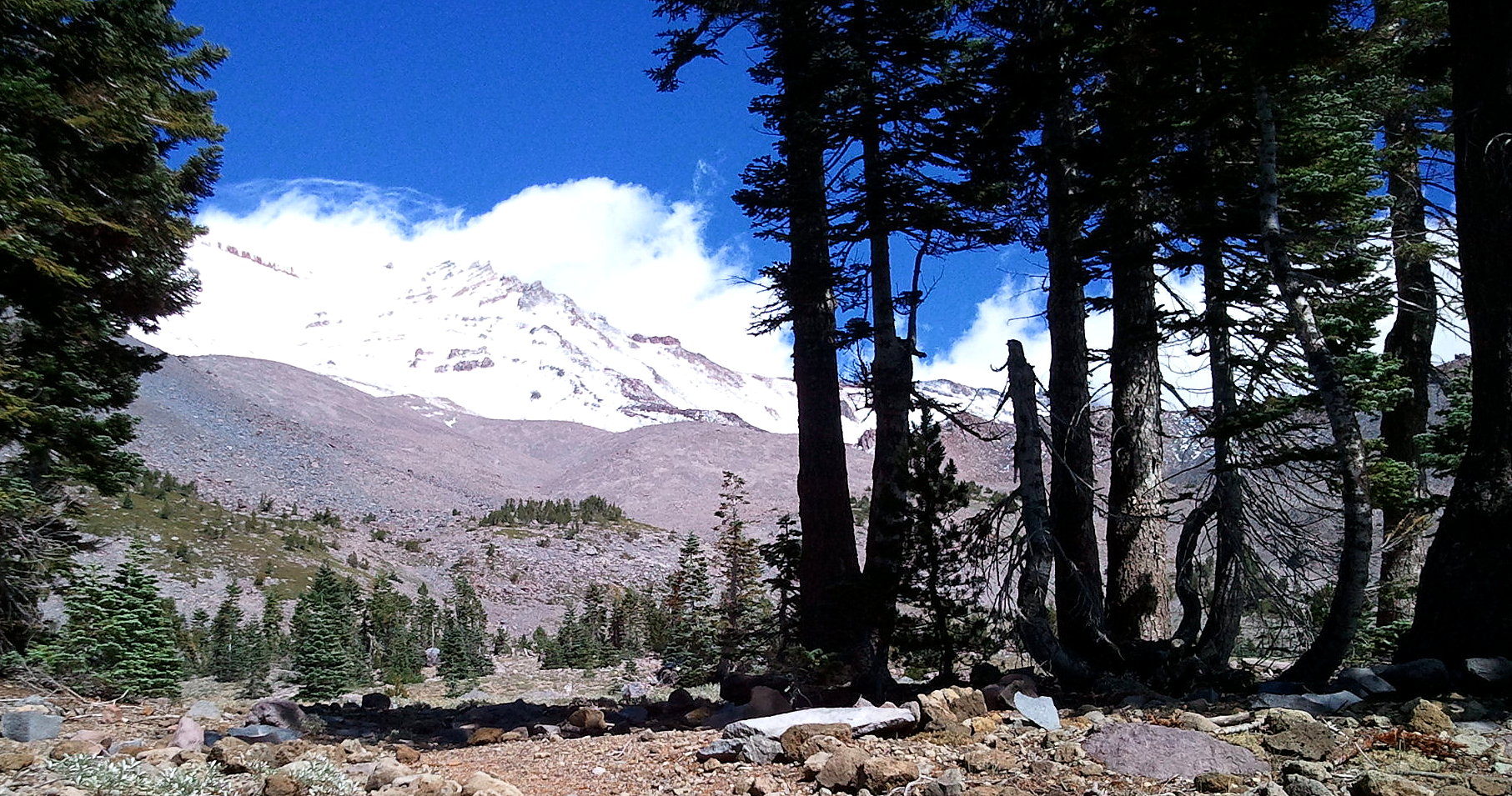
Horse Camp under Mt. Shasta.

For some it’s a real revelation to be silent. To not speak. To not say what is in, or on, ones mind just seems well….unnatural! And thus it can be very hard for people who come for an introductory retreat since the idea is to cut speaking to essentials. The purpose of this is to help people turn their attention inwards and acknowledge the inner chatter. Just hear the thoughts but not allow them to escape the lips. Some people write a diary to help themselves and I can see how that can work especially if life is geared around talking thoughts as a profession. Or even if this is not so.

One chap I talked to on a retreat who was sitting mournfully in a corner and obviously having a heard time helped me to get another perspective on silence. Silence for him meant punishment! Children during my schooling, and his, were sent to wait outside the classroom door if we were talking during class. Or worse, sent to face a corner of the classroom. Silence as punishment! Imagine? To be sure ‘idle chatter’ was discouraged during my growing up years as a novice monk. But I can’t remember there being much spare time to be chattering anyway.

So it was most interesting to hear somebody say recently, I love silence. It wasn’t the absence of sound she loved though. It was the quality of her unspoken thoughts that she loved about being silent. They are like a bell she said. Clear, defined, resonate. (Those are my words not hers.) Imagine being relieved of the pressure of having thoughts not destined to be spoken? Thoughts that are not a rehearsal for a future conversation or text for an email or blog post. Thoughts that have no purpose, no destination. Thoughts that don’t tell your story or anothers story…

There is more to say however my mind is not cooperating. Time to keep those unspoken thoughts. Unspoken.


Private Altar

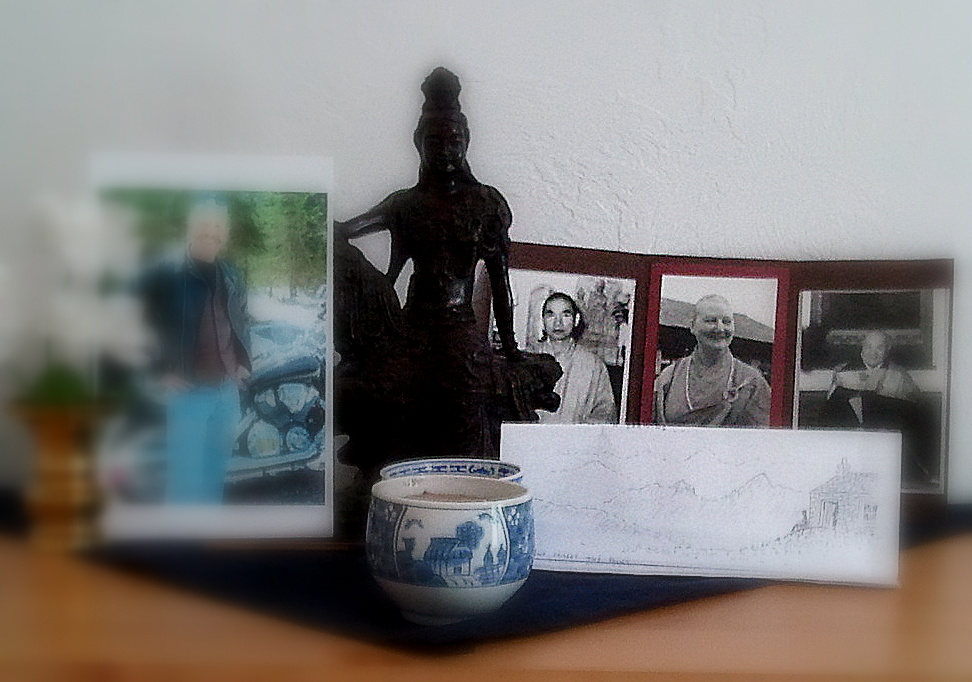
Private altar
Private altar

For the most part what practicing Buddhist do is private and not visible to the outside world. Actions come out of an internal space informed and shaped by the basic intention to be the best person one can be. That’s in terms of the basics of exercising compassion, keeping to the Buddhist Precepts and each day renewing the intention to be present/sit still/meditate. Somebody can ‘be a Buddhist’ and that not be known to anybody. Practice is a matter of the heart essentially. People with no faith tradition and those with one can and do endeavor to be the best person they can be each day and their inner world not be on display.

A private altar can be a helpful focus of spiritual endeavor. A place to remember people who have passed on, to express gratitude, to offer up that which needs to be let go of and a place one can actually and practically look up to. The altar gives direction to inner intentions. Today my altar, my looking up to place, focuses on the statue of Kanzeon (compassion), the image of my teacher Rev. Master Jiyu-Kennett and a four page hand written letter folded to show a drawing.  Less in focus is a photograph of the chap who died recently. He is still there on the altar – the altar of my heart, made visible. What cannot be there is the lengthy post I wrote earlier today and which I accidentally deleted! Thinking about it now I see it was probably just as well it went as it did. Better it remain, my thoughts remain on the altar of my heart. Hard as it is to say that.

So there is a physical place to put those letters, posts and emails where they can be let go of before they go public! Perhaps best in certain circumstances to never go public!The letter bringing news of the authors current daily life and insights into training is there to express gratitude. In addition correspondence received which disturb, worry or hurt can be usefully placed on the altar for awhile.

As somebody quoted from a scripture in the comments section let our wish be thus:

May we within the temple of our own hearts dwell
Amidst the myriad mountains.