Raise no Barriers

While in The Netherlands last week a group of us drove to the north east of the country to visit a couple of Sangha friends. They live very close to the German boarder in the region of Westerwolde. On our way home we visited Bourtange.

The fortifications were initially built during the Eighty Years’ War when William of Orange wanted to control the only road between Germany and the city of Groningen which was controlled by the Spaniards. This road followed a sandy ridge (tange) through the marshes.

I was particularly taken with the mandala like configuration of the fort. It’s a pleasant place to visit, a quite village atmosphere, tasteful shopping, tranquil walks along the top of the moats. Unfortunately my photographs from this visit are locked into my camera with no way of downloading them until I find the appropriate cable. This is a great pity as I captured a windmill there, the only one I saw during my entire stay! You can see it here along with several other pictures of the site.

The building which housed the ammunition for the cannons caught my attention. Apparently the walls are a metre thick however the roof is not completely attached to the walls. This was done in anticipation of ‘accidents’. If the building were to blow up the force would blast off the roof and the walls remain intact thus saving the village from being destroyed.

Considering what has been happening in the U.K. recently and the resulting need for greater vigilance when traveling internationally this fort kind of puts things in perspective. The need to defend ones patch has been going on for centuries, the tactics and weaponry have changed however.

Fortification. Defensive structure consisting of walls or mounds built around a stronghold to strengthen it.

This is a time to sit still, and raise no barriers.

Bureaublad = Desktop

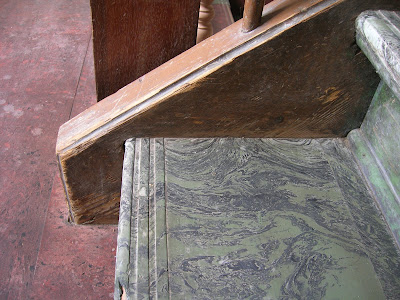
Before linoleum

On the bank of the mighty Maas, near Venlo.

The beach of the mighty Maas.

Wildflower garden with art.

I’m in the very south of The Netherlands near Venlo, close to the border with Germany. I’m being hosted by a couple who live and have an art studio in the converted novice quarters of a Catholic monastery for monks and nuns in a village called Steyl. Since the computer I’m using is showing me Blogger in Dutch, the spell checker is correcting the English to Dutch and I’ve only just worked out what Desktop is in Dutch, I’ll not stop to write much.

Have a Heart

In the book A Change of Heart Claire Sylvia tells her story following her heart transplant surgery.

She reported noticing that various attitudes, habits and tastes changed following her surgery. She had inexplicable cravings for foods she had previously disliked. For example, though she was a health-conscious dancer and choreographer, upon leaving the hospital she had an uncontrollable urge to go to a Kentucky Fried Chicken outlet and order chicken nuggets, a food she never ate. Sylvia found herself drawn toward cool colours and no longer dressed in the bright reds and oranges she used to prefer. She began behaving in an aggressive and impetuous manner that was uncharacteristic of her but turned out to be similar to the personality of her donor. Interestingly, uneaten Kentucky Fried Chicken nuggets were found in the jacket of the young man (her donor) when he was killed. From Organ Transplants and Cellular Memories, Nexus Magazine.

It makes sense that the heart has a mind of it’s own. Makes sense to me anyway. There was a Chanel 4 documentary series called Mindshock, aired last year. One was about heart transplants and the possibility that the heart retains some of the memory of the (now dead) donor. Interesting.

One of my monastic mentors on occasion would say, ‘The body does have a mind of it’s own you know’! He was teaching us to listen, with body-mind. They are not two.

In Kopke Kofie

I wonder who it was that traveled from Exeter St. Davids to Redruth on November 17th 2003. It wouldn’t have been me, I was in America at the time. And anyway only today did I set eyes on The Story of English, which is where I found the rail ticket, used as a book mark.

Tickets and travel arrangements have been occupying me these past days as I prepare to travel to the Netherlands on Monday. Much kindness has been extended by my Dutch hosts with reassurances that people speak English. All the same I’ve written instructions and maps to ease my way once I’m in the country.

English. A common language, what a gift. What a history! Now my eyes have been opened wide I can hardly put the book down.
Perhaps I’ll take it with me on Monday.

The Frisian for cow, lamb, goose, boat, dung, and rain is ko, lam, goes, boat, dong and rein. And the Frisian for ‘a cup of coffee’ is in kopke kofie. The similarity between Frisian and English, both with strong Germanic roots, emphasizes how close English is to German, Dutch and Danish. The Germanic echoes in all these languages betray their oldest and deepest roots. And it is no accident that the Dutch, for instance, often seem to speak English with as much ease as the English themselves. The evidence of a place like Friesland (an area in The Netherlands BTW) suggests that if that linguistic cataclysm, the Norman Conquest of 1066, had not occurred, the English today might speak a language not unlike modern Dutch. From The Story of English, p. 55.